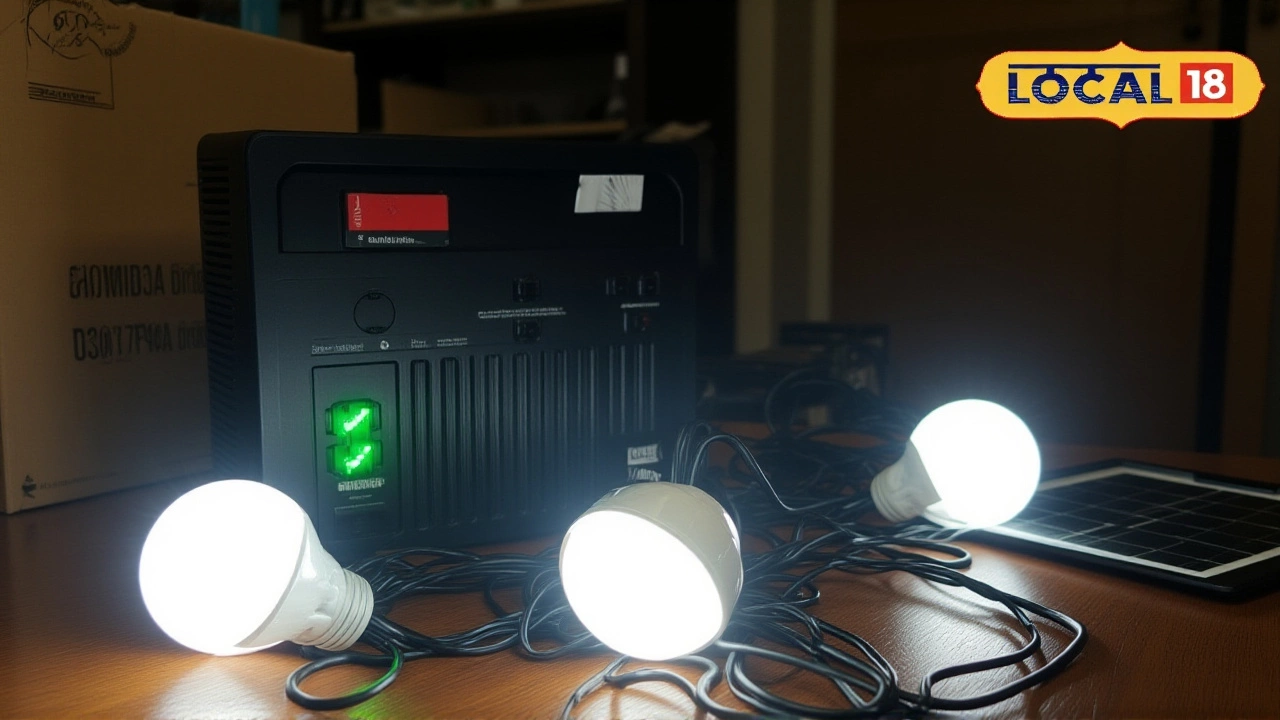
That catchy headline promising a "walking solar panel" that powers an inverter for 18 hours without stopping? It’s almost certainly clickbait. There is no verifiable mainstream news report, government press release, or credible product launch associated with this specific claim. Instead of a technological breakthrough, readers are likely looking at a viral marketing stunt or outright misinformation designed to exploit frustration over frequent power outages.
The phrase "Ab bijli ki nahi hogi chinta" (No more worry about electricity) taps into a very real pain point for millions of households across India. But the solution promised—a portable device that defies basic physics and engineering constraints—doesn’t exist in any recognized market. Major Indian news outlets, including The Times of India, NDTV, and NDTV Profit, have not reported on such a product. Neither has the Ministry of New and Renewable Energy issued any certification for a device matching this description.
The Physics Problem: Why 18 Hours Is Impossible
Here’s the thing: solar panels only generate power when the sun shines. To run an inverter for 18 hours continuously, you need a massive battery bank, not just a "portable panel." A typical household inverter draws significant power. Let’s say you’re running a modest 500-watt load. Over 18 hours, that’s 9 kilowatt-hours (kWh) of energy. To store 9 kWh, you’d need a battery system weighing hundreds of kilograms. Current lithium-ion technology isn’t light enough to be called "walking" or truly portable in a way that fits the headline’s implication of a small, handheld device. The claim ignores basic energy density limits. It’s like saying you can fill a swimming pool with a teaspoon.
Even if we assume the headline refers to a large, trailer-mounted solar setup, the term "chalta phirta" (walking/moving) suggests mobility that doesn’t align with the infrastructure required for 18-hour backup. Most portable solar kits available today offer 4-6 hours of backup for small devices like lights and fans, not full-household inverter support for nearly two days.
Who Is Behind This Viral Claim?
Without a named company or inventor, it’s hard to pin down the source. However, similar claims often originate from unverified social media pages selling generic solar accessories. These sellers frequently use exaggerated language to drive sales of low-capacity batteries or small monocrystalline panels. We looked for connections to known startups in the New Delhi tech ecosystem or manufacturing hubs in Gujarat. Nothing came up. No patent filings. No investor announcements. Just a void where facts should be.
This pattern is common in digital marketing. A vague promise is made, shared widely on WhatsApp and Facebook, and then disappears when scrutiny begins. Consumers are left wondering why they can’t find the product in stores. The answer? Because it likely never existed as described.
The Real State of Portable Solar in India
Don’t get us wrong. Portable solar technology is advancing rapidly. Companies like Microtek Laboratories and Luminous Power Technologies offer robust home inverters with solar charging capabilities. Startups are developing foldable panels for camping and emergency use. But these products come with clear specifications: wattage, battery capacity (in Ah or kWh), and expected runtime under specific loads. They don’t promise magical 18-hour runs without detailing the size of the battery. Transparency is key in legitimate journalism and commerce.
The lack of verifiable data here is a red flag. In a country grappling with grid stability issues, especially during summer peaks, consumers are vulnerable to scams. The Consumer Forum of India has warned against misleading advertisements in the electronics sector before. This headline fits that profile perfectly.

What Should You Look For Instead?
If you’re tired of power cuts, there are real solutions. Hybrid inverters that switch seamlessly between grid and solar power are widely available. Home solar installations, supported by government subsidies under the PM-KUSUM scheme, can significantly reduce bills and provide backup. Look for certified products from established brands. Check for Bureau of Indian Standards (BIS) marks. Ask for detailed technical sheets. If a seller can’t tell you the exact battery chemistry (like Lithium Iron Phosphate vs. Lead Acid) or the precise ampere-hour rating, walk away.
The next time you see a headline promising to solve all your energy woes with a single, mysterious gadget, pause. Do a quick search. If major news sites aren’t talking about it, it’s probably not real. Don’t let hope cloud your judgment—or your wallet.
Frequently Asked Questions
Is there really a solar panel that walks?
No. The term "walking solar panel" is a mistranslation or exaggeration used in clickbait headlines. While portable, foldable solar panels exist for camping, they do not have the capacity to power a home inverter for 18 hours. Such a claim violates basic principles of energy storage and density.
Can a solar inverter run for 18 hours without the grid?
Only with a very large, expensive battery bank. A standard home inverter might run for 2-4 hours on a typical battery. To achieve 18 hours, you would need a commercial-grade battery system weighing hundreds of kilograms, which is not "portable" in the consumer sense.
Why are there no news reports about this product?
Because the product as described does not exist in the mainstream market. Reputable news organizations verify facts before publishing. Since no company has launched a verified product with these specs, there is nothing to report. The headline is likely viral marketing fiction.
What are the signs of a fake solar product claim?
Watch for vague technical details, promises of excessive runtime without mentioning battery size, and lack of brand recognition. Legitimate products list specific wattage, voltage, and battery capacity (Ah/kWh). If the seller avoids these numbers, it’s likely a scam.